1927-10-25
The ship *Principessa Mafalda* sank on the night of October 25, 1927; 900 of the 1,259 passengers on board managed to save themselves.
Location: between Salvador de Bahia and Rio de Janeiro
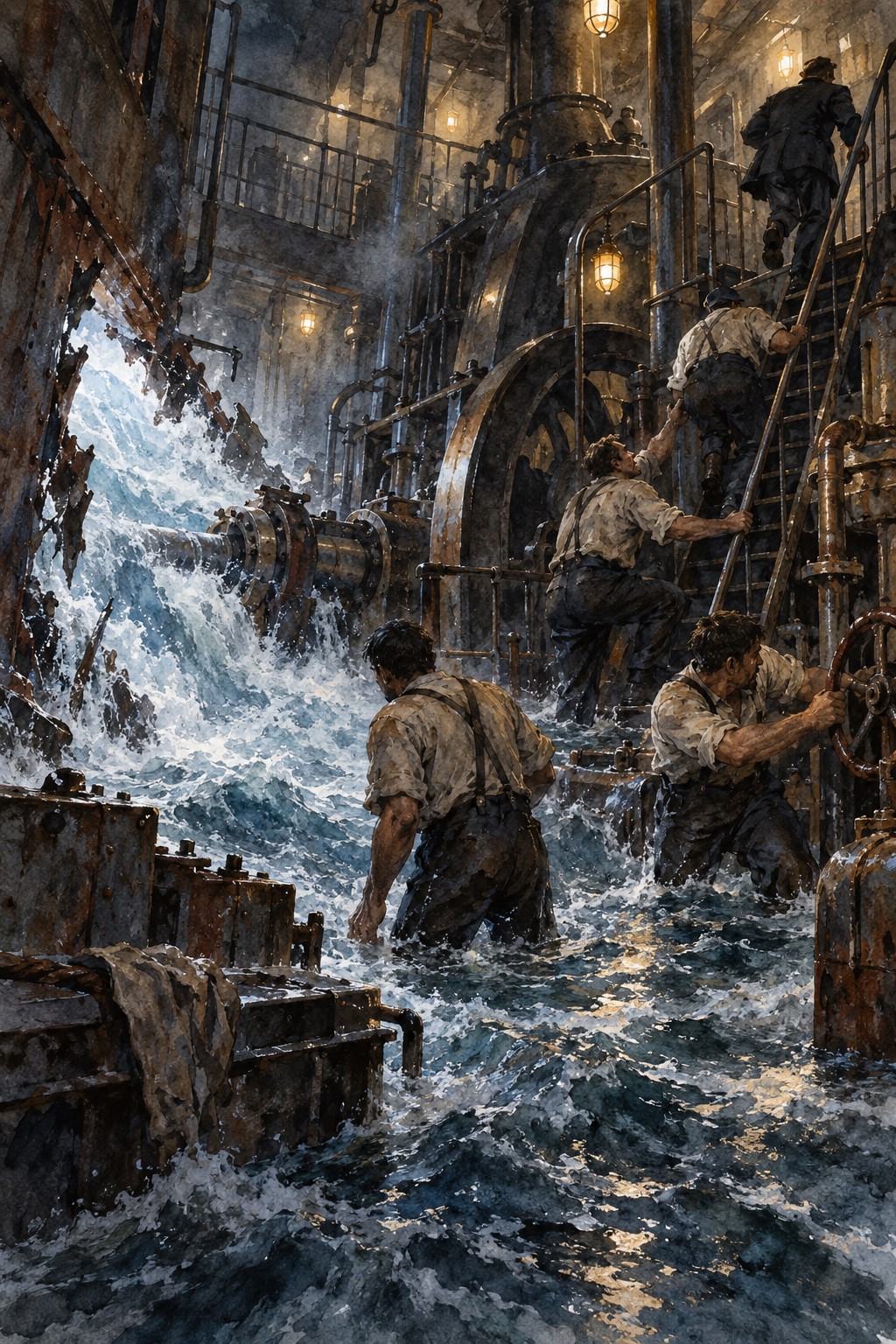
[..]
The ship departed for her last voyage from the port of Genoa on 11 October 1927, under the orders of the expert commander Simone Gulì, 62, a Neapolitan of Sicilian origins. There were 1,259 people on board, including a large minority of Syrian emigrants and above all numerous emigrants from Piedmont, Liguria and Veneto; among them was the pastry chef from Verona Ruggero Bauli, founder five years earlier of the homonymous confectionery company, which survived the disaster.[..]
On the morning of Tuesday 25 October 1927, the fifteenth day of the voyage, the vessel was cruising at a speed of only 13 knots and with a considerable roll to port. The Princess Mafalda was overtaken by the Dutch freighter Alhena, which, however, not receiving messages of any kind, continued undisturbed. At 17.10 of the same day, about 80 miles off the coast of Brazil, between Salvador de Bahia and Rio de Janeiro, a very strong shock was felt throughout the vessel;[..]
The chief engineer officer Silvio Scarabicchi, however, went up on the bridge and reported to the captain that he had identified the real problem, far more serious: the shaft of the left propeller had completely slipped off, which, continuing its rotary motion by inertia, she had been thrown forward and had opened a fatal gash in the hull at the stern, from which the water was pouring in, flooding the engine room, and would soon invade the hold as well, as the watertight doors no longer functioned properly; immediately an attempt was made, in vain, to repair the leak with metal panels. After the first reassurances to the passengers, Gulì gave the order to stop the cars and sounded the alarm siren to gather the crew, while the first officer Maresco gave the order to the radio operators Luigi Reschia and Francesco Boldracchi to send an S.O.S.[..]
However, the rescue ships put all their lifeboats into the sea and began to embark many passengers of the Italian transatlantic liner, while Gulì, equipped with a megaphone, tried to coordinate the rescue operations from the bridge as best as possible, ordering to give priority to women and children.
With the arrival of darkness, any visual communication became more difficult: at 22.03 the electricity supply was also cut off, plunging the entire vessel into darkness and putting an end to communications from the on-board telegraph. Realizing that the ship was practically lost, the captain ordered the lifeboats to be lowered, but as the ship was listing heavily to port, the starboard ones struck the hull, damaging themselves and becoming unserviceable. In the meantime, panic had arisen on board and many passengers fell or jumped into the sea, drowning or being eaten alive by sharks. On the port side the situation was better and Maresco did his best to lower several lances, but some of them revealed their bad condition, being equipped with ropes that had deteriorated greatly over time or were taking on water from the joints, so much so that it was necessary for the passengers to with hats, while other lifeboats were mobbed and capsized or sank from overload. The commander Gulì believed he could do nothing more and ordered "save whoever can", while the chaos on board increased more and more, also due to the absolute darkness due to the new moon and, while some passengers managed to reach swam the other ships, others committed suicide by shooting themselves; according to some versions, even the chief engineer Scarabicchi would have killed himself with a pistol shot.
In total, considering both the lifeboats of the ship and those coming from the other boats that arrived, about 900 people were saved. Princess Mafalda, around 10.20 pm, now completely flooded astern, rose vertically and sank into 1,200 fathoms of water (about 2,200 metres). Many testimonies collected later agreed with the affirmation that Gulì remained on board with the radio operators until the end, making the remaining musicians play the Royal March, the Italian national anthem at the time. The rescue of the few survivors who tried to stay afloat as best they could continued until late at night and at one o'clock the Alhena also left the disaster site. Two hours later, Brazilian steamers such as the Avelona, the Bagé, the Ayurnoca, the Manaos and the Puròs also arrived, but found no survivors.
Sources for this report:
External link
External link
External link
 External link