1945-01-30
SHIPWRECK of the ship Wilhelm Gustloff
Location: Baltic Sea
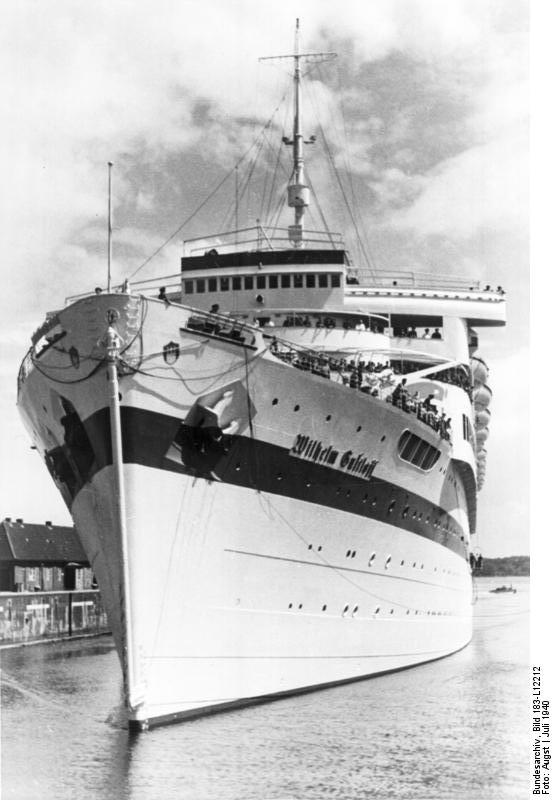
The Wilhelm Gustloff was a passenger ship of the German company Kraft durch Freude (KdF) which became infamous for being sunk on January 30, 1945 in the Baltic Sea by a Soviet submarine during the Second World War . The war action caused the death of about 9,000 people, going down in history as the most serious sinking never recorded for number of victims involved.
[..]
The first use of the hospital ship was in the Gdansk area at the end of the Polish campaign.
From May 1940 until July of the same year, Gustloff was in service in the Oslo area of Norway, as a floating hospital during the Norwegian campaign.
During the summer of 1940, Gustloff was ordered to prepare for operations in the invasion of England, but that option was canceled by Adolf Hitler. Once again he set sail; then from Oslo with another 414 wounded.
Shortly after this trip, I ended the trip. the hospital ship service, and sailed; in the direction of Gotenhafen. She was repainted in warship gray and converted into a barracks ship in the service of the Kriegsmarine, docked in the port of Gotenhafen.
[..]
Once the war was over, the rescue operations could be considered a success, as over two million people were transported. However, 25,000 to 30,000 people perished, especially following the sinking of the Gustloff and Goya which alone caused over 15,000 deaths.
When Gustloff left; the protection of the port of Gotenhafen on 30 January 1945, the climatic conditions were very bad, with very strong winds, snow and a temperature of ten degrees below zero. Many blocks of ice floated in the Baltic Sea. The possibilities to survive for a sinking, in such a sea; cold and in weather like this, they were nil. Gustloff began; her voyage without any escorts, armed only with some anti-aircraft armament, while no anti-submarine defenses were installed.
Sinking
The passenger list included 918 officers, 173 crew members, 373 units members, and 373 crew members. Naval Auxiliaries formed exclusively by women, 162 wounded, and 4,424 refugees, for a total of 6,050 people. However, the official cargo list did not account for the hundreds of people who had taken their places on Gustloff's deck. In fact, new research shows that the total number of people at the time of the sinking was over 10,000. The most reliable research was that of Heinz Schon who divided the number of people as follows: 8956 refugees, 918 between officers and members of the 2. Unterseeboot-Lehrdivision, 373 women from the Unterseeboot-Lehrdivision; Auxiliaries, 173 men of the naval forces, and 162 wounded soldiers for a total of 10,582 people on board.
At 21:08 on January 30, 1945 (21:08 Gotenhafen time, 23:08 Moscow time), the Russian submarine S-13 commanded by Lieutenant Commander Aleksandr Ivanovich Marinesko, launched ; four torpedoes against Gustloff. The first torpedo hit; the ship's bow directly below the waterline. Immediately Gustloff folded; to starboard. The signal flares and the SOS signal were immediately fired. The second torpedo hit; Gustloff in the pool area causing that area to explode completely, and finally the third torpedo hit the pool. the engine room devastating the entire hull. Soon the forecastle was almost completely submerged, while the stern rose above sea level. Part of the lifeboats remained unused due to frozen supports. In about fifty minutes, Gustloff sank; in the cold waters of the Baltic Sea, bringing with it; over 9,000 people, while only 1,320 survived.
The sinking of the Gustloff was by far the most difficult. serious and frightening sinking in naval history. No other tragedy at sea has had such a loss of life. heavy.
Sources for this report:
External link
External link
 External link